Marketing · 12 min read
I used to think webinars and VSLs were the best way to sell high-ticket products & services. I was wrong.
I built them for years. They worked well enough. But every business I've been part of since - courses, software, ecommerce, a coaching program with 400+ clients, and a decade of client work - got its best buyers the same way. They came from long-form, pre-sell pages that nobody had to register for.
Let me get the embarrassing part out of the way first. For a long stretch of my career I was completely sure about this. Webinars were the answer. Everybody I looked up to ran one. If you weren't doing a VSL you weren't serious. I said that out loud, to clients, with my whole chest.
And they worked. That's the annoying part. They worked well enough that I never stopped to ask the obvious question, which was: why do none of our best clients come from these?
Every deal I actually wanted came from somebody who read something. Not somebody who sat through something.
It took me about a decade and a total accident to figure out why. Here's the whole thing.
- The 2015 post I wrote by accident that everything else came from.
- How the same page sold digital courses during the print-on-demand t-shirt craze.
- The webinar I built after it - and what it taught me about who actually shows up.
- $25k of a software service sold in days at MSGHero, with one pre-sell page.
- The same play on ecommerce brands, client brands, and a 400+ client coaching program.
- The real numbers: sub-$75 booked calls, 1,964 applications, 421 high-ticket clients.
- Why it works best on high-priced offers - and how one page splinters into a flywheel.
The accident: one post about the Google Display Planner (2015)
Everything I've built since traces back to a single blog post. It wasn't strategy. I wrote up how I was using the Google Display Planner to find better Facebook interests, because it was working and I thought it was interesting.
This was back when Facebook interests actually mattered. Pre-Andromeda. The whole game was digging through the Display Planner to find the hidden interest gems your competitors didn't know existed - the ones Facebook wouldn't surface in their suggestion tool - then building campaigns around them before everyone else caught on.
Then we ran cold ads straight to it. Not to a registration page. To the article itself.
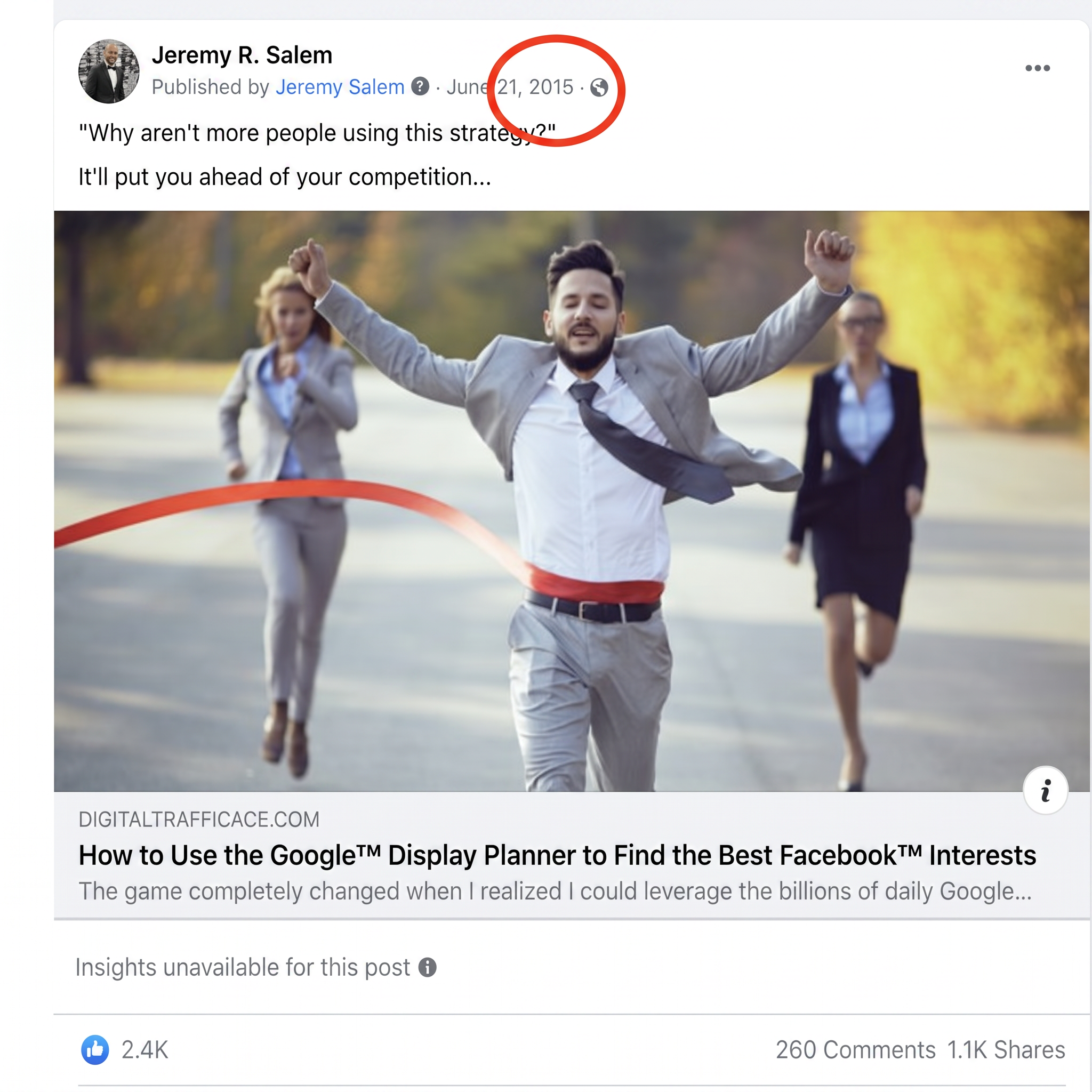
The ad itself became the social proof. 2.4K reactions. 260 comments. 1.1K shares. Then things got strange. My email list exploded. Friend requests from everyone and their mom. Influencers in the space - people I'd been quietly studying - emailing me to connect. Agencies asking if I'd consult. People asking what I charged for coaching, before I had anything to sell them.
Nobody in the history of the internet has ever emailed me because they watched half of my VSL.
That one post built the list, built the reputation, and paid for everything that came next. I spent the following decade proving it wasn't a fluke - in five different businesses.
Business #1: digital courses, during the t-shirt craze
Ten to twelve years ago, print-on-demand t-shirts were the thing. Everybody was running Teespring campaigns. We sold courses teaching it.
Same play. I wrote the actual argument out in public - how to outsource a print-on-demand business - free, no email required, and put one line at the end pointing to a live training with Matt Schmitt (former CEO of Skup, now running shoperator.ai and a serial entrepreneur).
Over $30,000 from one post. And the people who showed up were different. They weren't asking “what is this?” They were asking “how do I start?”
Then I did the webinar thing properly. Built it, ran it, filled it. And I'll say this plainly: I've made webinars work. They converted. But they converted best on opportunity-style offers - “here's a new way to make money” - where the audience is hungry, unsophisticated about the category, and happy to be led. The moment I needed to sell into a more sophisticated market, the webinar started creaking. I needed a mechanism that could carry a real argument.
Compared to the webinars, where the show rate was brutal and the people who did show still needed the entire case made from scratch, the post had already done that job before anyone raised a hand. The training just took the order.
Business #2: software (MSGHero)
I was a partner in MSGHero, a Messenger marketing platform competing with ManyChat. Crowded category, technical buyer, plenty of skepticism.
The software itself was self-serve, but the money was in the done-for-you side - we'd build and run the Messenger campaigns for clients on top of our own platform. That's a service you can't sell from a pricing table. It needs an argument: why Messenger, why now, why us, why not just hire someone cheap.
So we wrote the argument as a pre-sell page and ran traffic to it. Over $25,000 of that DFY service sold in a matter of days - from a page people read before anyone got on a call with them.
Business #3: ecommerce
I've run at least four ecommerce brands of my own, and the pre-sell page became how we sold past the limits of a product page. A product page can list features. It can't teach somebody why the category they're currently buying from is failing them.
Here's a client example we ran: barkybakey.com/pages/organic-dog-treat-mix. Go read it. It doesn't look like an ad, and that's the entire point.
Business #4: a coaching program, 400+ clients
I'd started consulting and coaching startup ecommerce brands - how to pick products, build the store, buy the media, scale it. So I did the only thing I knew how to do: I wrote the whole playbook out in public. A long post on exactly how I grow a store, select products, and run ads. Nothing withheld.
Then we ran cold ads at it. That flagship page - roughly 7,500 words - feeding a program page and an application produced 1,964 applications and 421 clients into $3k–$30k programs. I'll show you the ad account rows in a minute.
Same model worked for Bryan Harris and Growth Tools - one of the biggest coaching brands in the space, Inc 5000 listed - where we used pre-sell content to drive qualified applications instead of relying on webinars or VSLs.
Business #5: Content Mavericks, and our clients
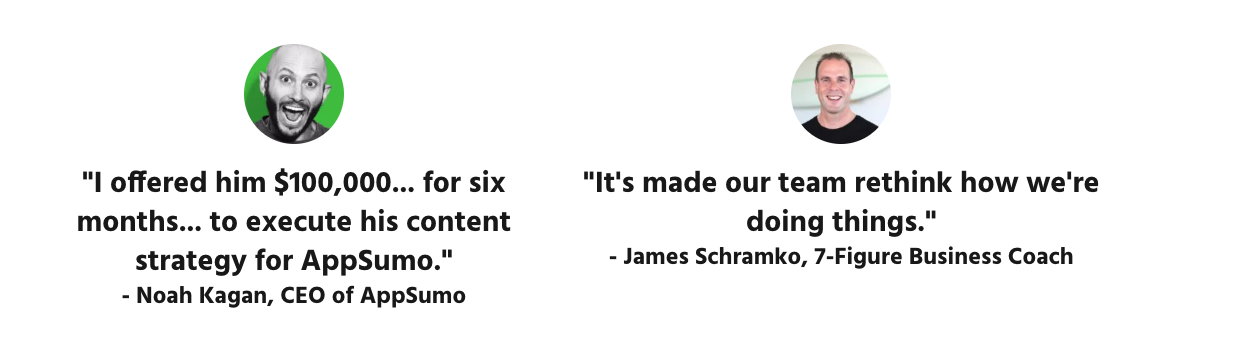
For years now this is what we build for clients - pre-sell pages for coaches, consultants, agencies, software companies and premium service businesses. The same content approach is how we've gotten in front of teams at Amazon, Shopify, HubSpot, AppSumo and Noah Kagan, without cold outreach.
So we made pre-sell content the whole engine. The funnel is embarrassingly plain:
And it works best when the thing you're selling is expensive. The bigger the decision, the more the buyer wants to read before they talk to anybody.
Why I kept building webinars anyway
Knowing something works and letting go of what you were taught are two different jobs. We kept building webinars and VSLs for years after 2015, because that's what the industry did and I didn't want to be the weirdo.
The people most likely to buy from you are the least likely to sit in your webinar room for 75 minutes.
Here's what finally broke it for me. I market to people the way I want to be marketed to - and I don't watch webinars. I don't sit through VSLs. I haven't sent a cold email since my SEO days. I've never posted a self-promotional thing on my personal profile in my life.
But if I'm scrolling and a headline grabs me, I'm in. I'll read it right there or save it for the flight. On my time, at my speed, skipping the parts I already know.
I'd been building the exact asset I personally would never consume, and selling it to people who are more like me than not.
The most affluent people in any market read
This is the part that changed how I buy media. Go look at who your highest-value buyers actually are. Business owners. Executives. Physicians. Founders with a team. People who already spend money to solve problems.
They don't have 75 minutes at 2pm on a Tuesday. They have four minutes in an Uber and they'd rather read something dense than watch something padded. I've spent over $250,000 on mentors and education, and I'm exactly that buyer.
There's a reason advertorials have run in magazines for decades, and a reason the Journal and the Economist are full of them. David Ogilvy measured it:
“Ads which look like editorial pages attract about 50 per cent more readers than ads which look like ads.”
| Asset | Who actually hears the argument |
|---|---|
| Webinar funnel | ~8% of clicks (register → show → stay to the end) |
| VSL page | ~15% watch past the halfway mark |
| Lead magnet + email | ~25% open, far fewer read |
| Ungated pre-sell page | 100% - every click can read it right now |
To be clear, I'm not telling you to kill your webinar. If it works, keep it. The pre-sell page reaches the segment of your market that is currently scrolling past it.
The numbers, because opinions are cheap
When we tested this properly, a “result” in the dashboard wasn't a lead or an opt-in. It was a completed application plus a scheduled phone call. Here's what those cost:
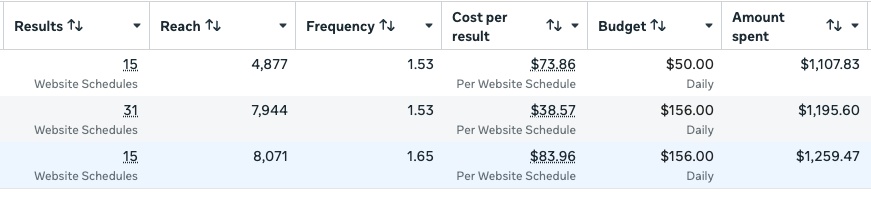
Look at the frequency column too - 1.53. These aren't people we pounded into submission with retargeting. Most of them read the page and booked.
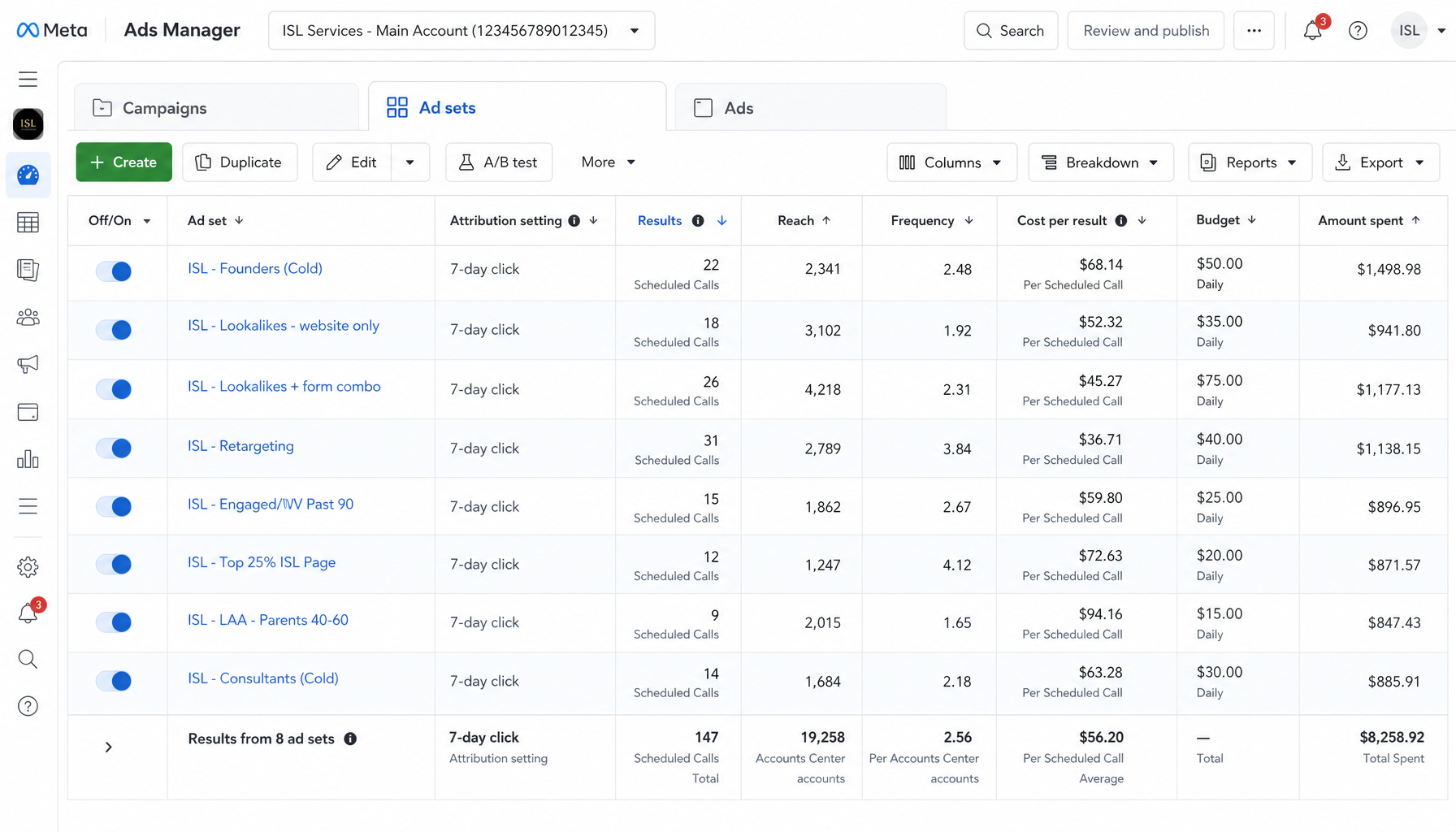
Here's what someone had to do to become one of those numbers:
- Click the ad.
- Read (or at least scan) a ~7,500-word pre-sell post.
- Click through to the program page.
- Fill out an application.
- Schedule a call.
- Pass further qualification by text and a deeper application.
Six steps. More steps than a webinar funnel - and far less friction, because none of them required being in a specific place at a specific time watching someone talk.
Across variations of that one page we've collected 1,964 applications and enrolled 421 clients into $3k–$30k programs.
If you're spending real money on ads and your booked calls still show up cold, that's usually a page problem, not a traffic problem. We'll model your version of these numbers live on a call.
See if your business is a fit →What a pre-sell page actually looks like
We call these pages Invisible Sales Letters - invisible because they don't look like sales letters. They read like something a person wrote because they had something to say.
It's still a sales letter, though. Every section has a job:
- Positions you as the expert.
- Frames your unique mechanism for getting the result.
- Educates the buyer while pre-selling them.
- Creates real goodwill - value delivered in advance.
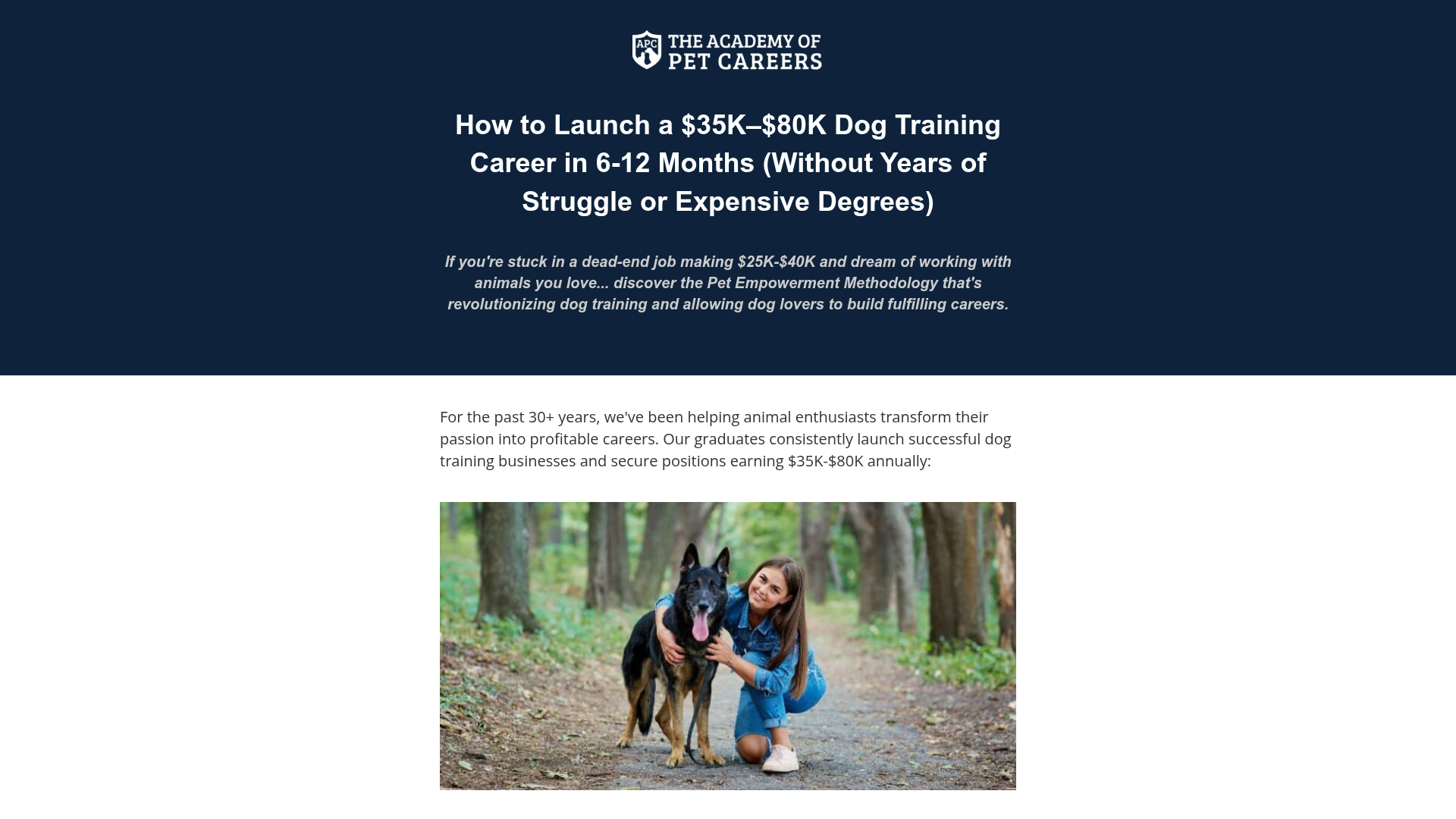
The Academy of Pet Careers
They train and certify people who want to work with animals - grooming, dog training, veterinary assisting. Real tuition, real career decision. They came to us because their ads were pulling curious browsers instead of people ready to enroll. The page makes the career case first, then asks.
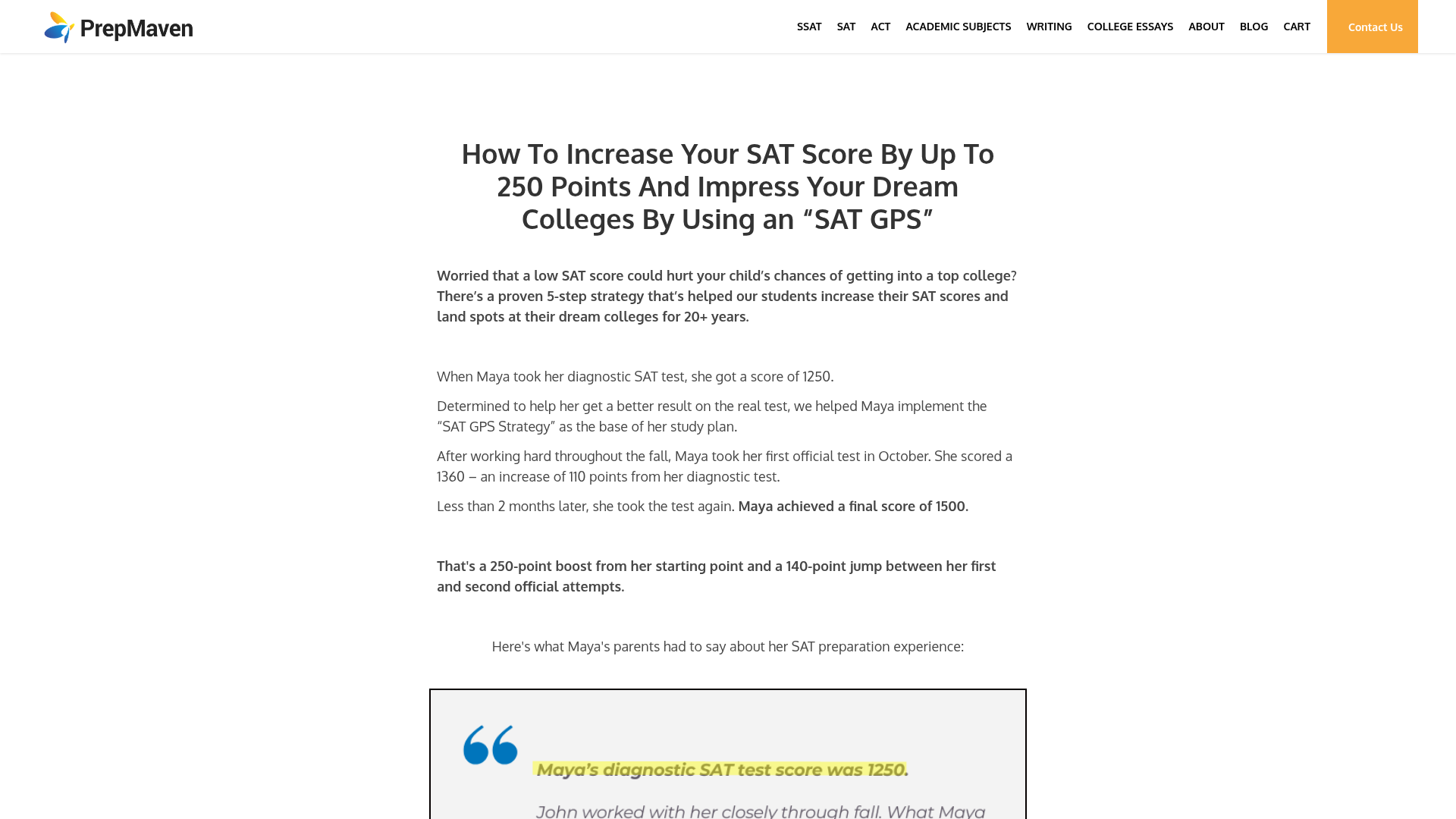
PrepMaven
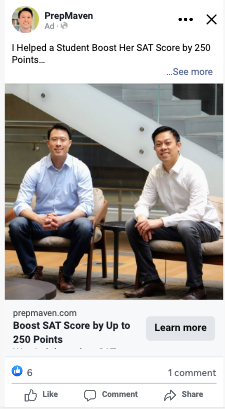
Elite SAT/ACT and admissions tutoring run by Kevin and Greg - Princeton grads, two of the sharpest operators we've worked with. They came to us with a premium offer in a market full of cheap tutoring. The page does the job their reputation couldn't do at cold-traffic scale: it proves the difference before the price ever comes up.
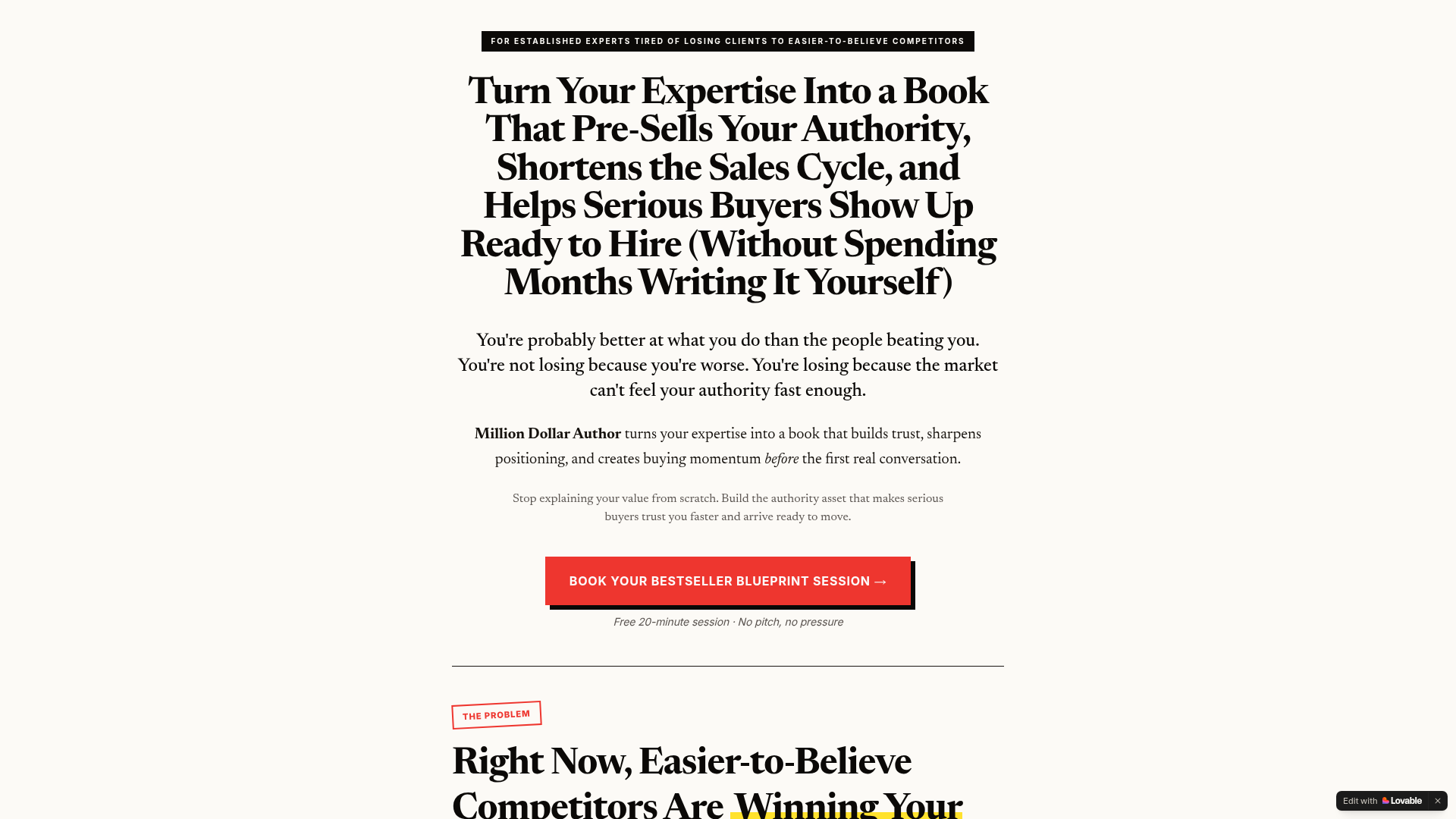
Million Dollar Author
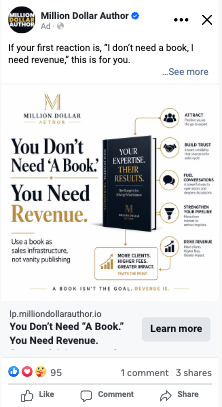
Steve works with high-end executives and business professionals who want to turn their expertise into a book and a platform. Expensive engagement, sophisticated buyer, zero tolerance for hype. He came to us for qualified conversations - and the page flooded his calendar with them.
We asked people why they booked. They told on the page.
Once someone schedules, we send a deeper application. One of the questions: what motivated you to schedule a call? Over and over, the answer is the page.
“I read through your blog and the plan you have there is more feasible. It is not bogus like most of the other courses I have seen.”
“The article made so much sense and has helped me already. My plans were the traditional ones - that changed a lot for me.”
“I have been looking for actual answers to my questions, not generic ones. After reading, it sounds like I can get genuine advice.”
“I read your 7,500-word guide and it made lots of sense.”
That's a tiny sample. We hear the same thing live on calls, which is the whole point - they arrive already sold on the approach, so the call is just about fit.
Why this stays evergreen when everything else expires
On the internet things change fast. If your webinar relies on something that just changed, you're re-recording, re-editing, or scrapping it.
With a page? I pop in, tweak a few sentences and an image, and my marketing is current again in ten minutes.
Consumption habits move, too. Webinars were novel, then normal, then show rates fell off a cliff. Reading never goes out of style.
It also unlocks traffic most competitors can't touch. Everyone runs webinars on Meta and YouTube. A content page also runs on native platforms that exist to serve content.
Then you splinter it, and the page starts feeding itself
Here's the part most people miss. Once the flagship pre-sell page exists, every section inside it is a piece of content waiting to be born. We pulled individual topics out of the guide, expanded them into their own posts, and ran ads to those too.
Then we retarget everyone who hit the flagship and didn't book - new angles on the same page, plus the splintered posts. Those retargeting conversions came in at $41.47 apiece.
Two things happen, and both of them count.
Cold prospect clicks the ad, reads the flagship start to finish, beliefs shift in one sitting, fills out the qualifier, books. Happens every week.
Cold prospect scans it and gets on with their life. A day later: a case study. Then a comparison post. Then a deep-dive. Each points back to the flagship. By touch four they read the whole thing - and book.
Most people can't picture what their flagship pre-sell page would even say. That's the part we do live on a call - the angle, the enemy, the belief shifts, sketched out in front of you.
See if your business is a fit →The ads that feed it look like editorial, not ads
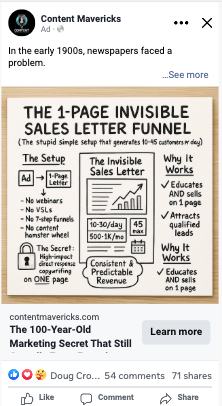
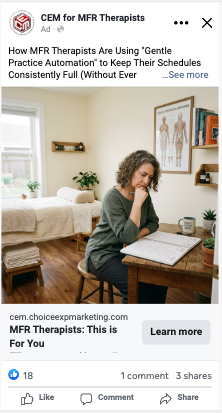
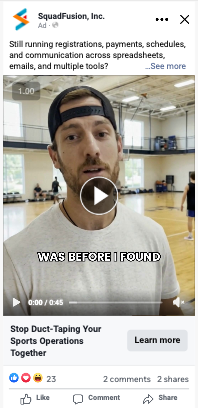
The ad has one job: make the article sound worth reading. No hype creative, no countdown timers, no “free masterclass.” One of my best hooks was literally: “Please read this if you're considering (or already doing) this.” That ad did over 1,000 engagements, 231 comments, and 212 shares - because it doesn't read like an ad.
The formula travels. Selling golf coaching? “Don't Pick Up a Golf Club Again Until You Read This.”

If you want to try this in your business
I'm not going to pretend a post can tell you what your pre-sell page should say. Yours depends on your market, your offer, and what your buyers already believe.
So we do that part live. Twenty minutes: we map what your flagship page would actually say - the angle, the enemy, the belief shifts - then run the revenue math on it against your real numbers. No pitch, no pressure. You keep the sketch either way.
20-min call, no pitch · Established offers only